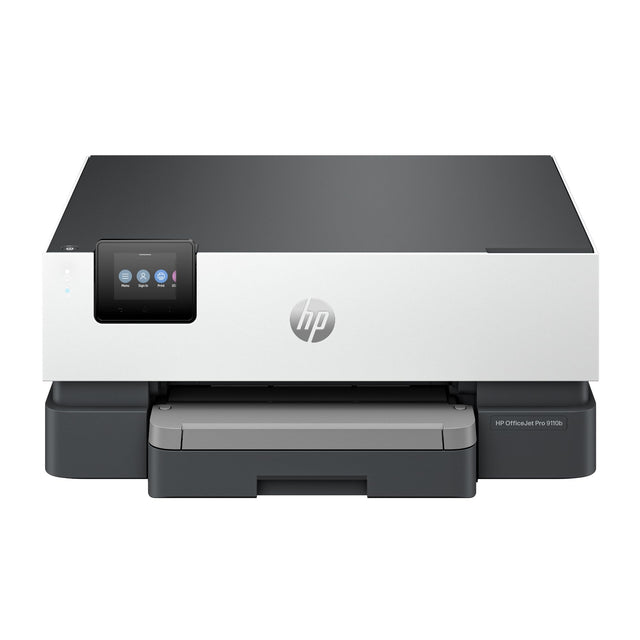
HP OfficeJet Pro 8125 Wireless All-in-One Color Inkjet Printer vs HP OfficeJet Pro 9110b Color Inkjet Printer: both are close inkjet all-in-ones from HP. The main differences: scanning and copying (8125 has it); fax (8125 has it); Wi-Fi (8125 has it). The 8125 costs less.
| 8125 | 9110b | |
|---|---|---|
| Type | Inkjet all-in-one | Inkjet printer |
| Color | Color | Color |
| Functions | Print, Scan, Copy, Fax | |
| Speed | — | — |
| Wi-Fi | Yes | No |
| Auto 2-sided | — | — |
| Fax | Yes | No |
| Weight | 23 lb | 17 lb |
| Availability | Ships within 7 business days | Ships within 7 business days |
| Toner / ink | — | Ink for HP OfficeJet Pro 9110b |
| Buy | 8125 | 9110b |
Which should you buy?
- Choose the 8125 if you need scanning and copying, fax and Wi-Fi.
- Choose the 9110b if the extra features of the other one don't matter to you.


More: printer comparisons · buying guides
Related guides
- HP DeskJet 4352 All-in-One Printer vs HP OfficeJet Pro 8125 Wireless All-in-One Color Inkjet Printer
- HP DeskJet 4355 Color Inkjet Printer vs HP OfficeJet Pro 8125 Wireless All-in-One Color Inkjet Printer
- HP Envy 6155 Wireless All-in-One Color Inkjet Printer vs HP OfficeJet Pro 9110b Color Inkjet Printer
- HP Envy 6555 Wireless All-in-One Color Inkjet Printer vs HP OfficeJet Pro 9110b Color Inkjet Printer
- HP OfficeJet Pro 8125 Wireless All-in-One Color Inkjet Printer vs HP Smart Tank 5000 Ink Tank Printer
- HP OfficeJet Pro 8125 Wireless All-in-One Color Inkjet Printer vs HP Smart Tank 5100 Ink Tank Printer
Understanding the HP OfficeJet Pro 8125
What kind of printer this is
An inkjet printer sprays tiny drops of ink. It is the best choice for photos and rich color at a low purchase price. Ink can dry out if unused for weeks, so it suits people who print regularly.
It is an all-in-one: it prints, scans, copies and faxes, which saves desk space and a second device.
What the specs mean
- Color
- Prints in color using four cartridges (black, cyan, magenta, yellow), each replaced separately.
- Print · Scan · Copy · Fax
- Scanning turns paper into PDFs you can email. Many all-in-ones have an ADF (automatic document feeder) to scan a stack of pages without lifting the lid.
- Wi-Fi
- Print from laptops and phones anywhere on your network, with no cable. USB is there as a backup.
The real cost of a printer
The price tag is only the start. Over 3 years most printers cost more in ink than to buy. Before choosing, compare:
- Cost per page: cartridge price ÷ page yield.
- Recommended monthly volume: the pages per month it handles comfortably. The bigger duty cycle number is a maximum, not a target.
- Starter cartridges: many printers ship with setup cartridges that hold less than a full one. Plan your first order early.
Setting it up
- Unpack it and remove all orange tape and packing pieces, including inside the covers and paper tray.
- Install the ink cartridges and load paper.
- Power on and follow the screen to pick your language and join your Wi-Fi.
- Install the driver or app from HP's website (HP Smart). Avoid driver CDs, which are often out of date.
- Print a test page, then register the printer to activate the warranty.
Who it's best for
- Home users printing photos, school work and color
- Occasional printing at a low purchase price
- Anyone who also scans or copies regularly
Keep it running well
- Keep a spare cartridge on hand so a busy day never stops.
- Use good, dry paper and fan the stack before loading to avoid jams.
- Install firmware updates from HP for fixes and security.
- Faded pages, streaks or jams? Start with our troubleshooting guides.
Printer terms, explained
Laser vs inkjet
Laser printers use toner powder. They are fast, crisp on text, have a low cost per page and never dry out. Inkjets use liquid ink and are best for photos, at a lower purchase price. Full comparison
Mono vs color
Mono (black-and-white) printers use one cartridge and cost less per page. Color printers add cyan, magenta and yellow cartridges for charts, flyers and photos.
All-in-one (MFP)
A printer that also scans and copies, and sometimes faxes. MFP stands for multifunction printer.
ADF
Automatic document feeder: a tray on top that pulls a stack of pages through the scanner, so you don't scan page by page.
Duplex (auto 2-sided)
Prints on both sides of the paper automatically, which saves paper. On many model names, a "d" means duplex and a "w" means wireless.
PPM
Pages per minute on standard text pages. A team of 5–10 people is comfortable from about 30 ppm.
Duty cycle vs monthly volume
Duty cycle is the maximum a printer can survive in a month. The recommended monthly volume, usually much lower, is what it handles comfortably. Choose by the second number.
DPI
Dots per inch: print sharpness. 600 dpi is crisp for text, and 1200 dpi or more matters for fine graphics and photos.
Wi-Fi, Wi-Fi Direct, Ethernet
Wi-Fi joins your network. Wi-Fi Direct lets a phone connect to the printer without a network. Ethernet (cable) is the most reliable choice for shared office printers.
Starter cartridges
Many new printers include setup cartridges with less toner or ink than a full replacement. Order your first full cartridge early.
Buying for several offices, or reselling? Get a volume quote or apply for wholesale pricing →